The Power of Vision: Why People Don’t Resist Change
May 14, 2026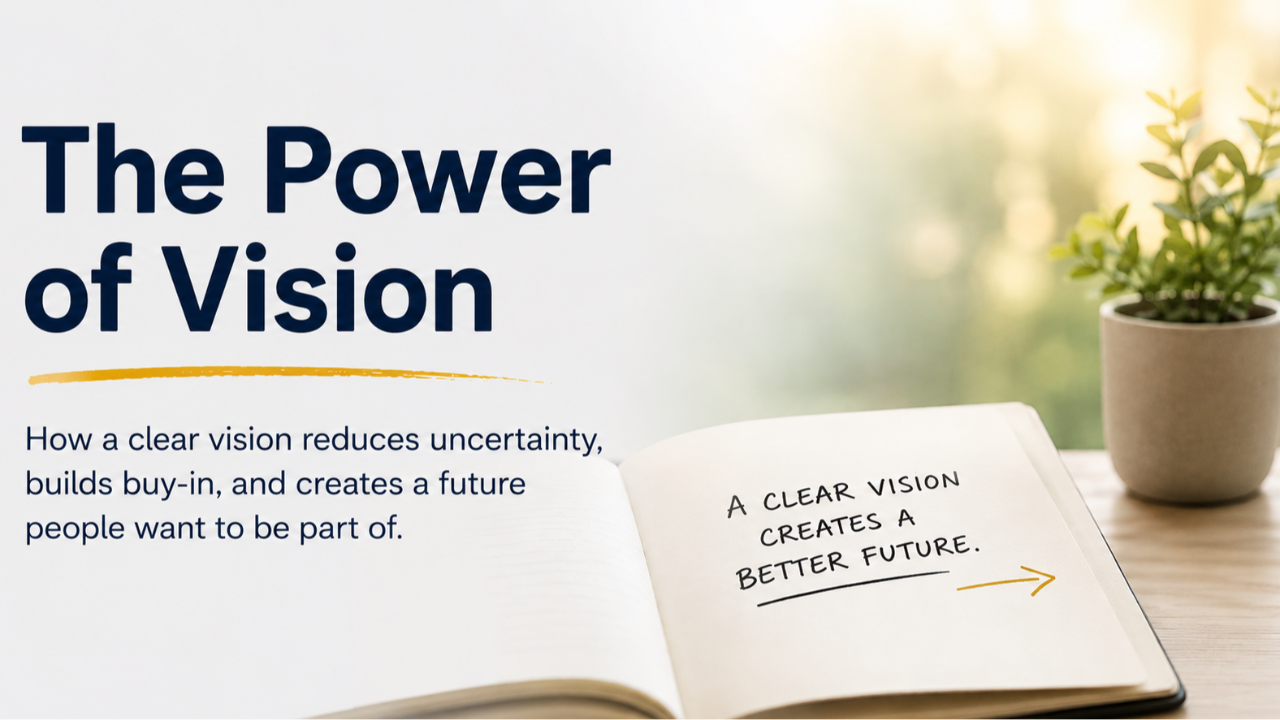
People Don’t Resist Change. They Resist Uncertainty.
Change has a reputation problem.
Spend enough time in organizations and you’ll hear familiar phrases: “People hate change.” “Our team resists change.” “People just want things to stay the same.”
There is some truth in those statements. Change can be uncomfortable. It can disrupt routines, challenge assumptions, and create extra work. But over the years, I’ve become convinced that people often aren’t resisting change itself as much as they are resisting something deeper: uncertainty.
People know what they are leaving behind. They just cannot yet see what they are moving toward. That gap matters.
When people cannot clearly picture the future, uncertainty has a way of filling in the blanks. We begin imagining worst-case scenarios. We question motives. We become anxious. Resistance grows. Stress increases.
I’ve seen it happen in organizations introducing new systems, restructuring teams, changing leadership, or shifting strategy. Leaders carefully explain the project plan. They outline timelines, processes, and next steps. Yet people still walk away uneasy.
Why? Because explaining change is not the same thing as creating vision.
Vision Helps People Get On Board
A compelling vision reduces uncertainty and gives people a reason to move forward.
Vision does not eliminate the hard work of change. It does not remove obstacles or guarantee success. But it does help people understand why the effort matters.
People rarely buy into change because of charts, timelines, or project plans. They buy into a picture of something worth moving toward.
The strongest leaders I’ve observed do more than announce change. They help people see the possibilities.
Three Things to Consider When Creating a Vision
When helping others navigate change, here are three ideas worth keeping in mind:
- Paint a picture, not just a process.
People need more than logistics. They need to understand what life, work, or the organization becomes when the change succeeds. What improves? What becomes possible? - Make the future meaningful.
Vision should answer more than "what" and "how." It should answer "why." Why does this matter? Why is the effort worth it? Meaning helps people endure the discomfort that often accompanies change. - Invite people into creating the vision.
One of the biggest mistakes leaders make is handing people a fully formed vision and expecting enthusiasm. People support what they help create. When individuals and teams contribute, even in small ways, buy-in, ownership, trust, and commitment increase.
The Payoff
A clear vision does more than improve communication. It reduces stress. It creates alignment. It builds ownership. It gives people confidence that they are not simply leaving something behind but moving toward something worthwhile.
Whether you’re leading a team, guiding your family, managing a personal transition, or simply trying to create change in your own life, vision matters.
Before asking people to embrace change, perhaps the first question is not: Have I explained it?
Maybe the better question is: Have I helped them see it?
Stay connected with news and updates!
Join my mailing list to receive the latest news and updates.
Don't worry, your information will not be shared.
We hate SPAM. We will never sell your information, for any reason.